From Savings to Capital: Using Digital Banking and Starlink Connectivity for Passive Income
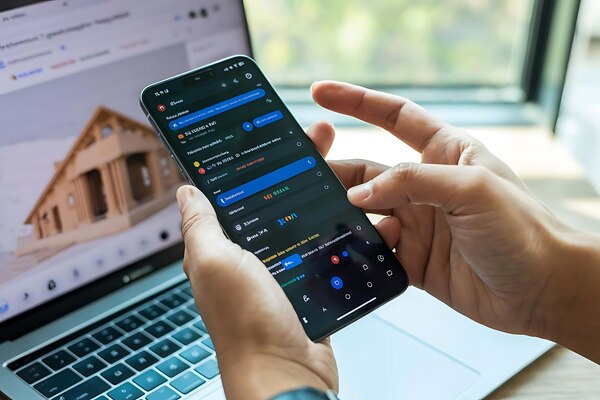
From the moment money stops being just “savings” and starts working as “capital,” your financial trajectory changes. For decades this transition was limited by geography, access to financial services, and information. Digital banking and global internet connectivity (including systems like Starlink) are breaking down those barriers, allowing anyone—from a village with no physical bank branch to a city apartment—to participate in global markets and build passive income streams.
Below is a structured look at how to move from basic savings to productive capital using digital tools and reliable connectivity.
1. From Savings to Capital: What Actually Changes?
Savings
- Stored value, usually in cash or a low-yield bank account
- Main purpose: safety and liquidity
- Limited growth, often below inflation
Capital
- Savings intentionally allocated to productive assets
- Main purpose: growth, income, or ownership
- Potentially higher return, but with risk
The crucial shift is mental and structural:
You stop asking, “How do I keep my money safe?” and start asking, “How do I deploy my money intelligently for income over time?”
Digital banking and satellite internet don’t replace this mindset; they dramatically expand what’s possible once you adopt it.
2. Why Digital Banking Is the New Baseline
Traditional banking often meant: limited opening hours, paperwork, local-only products, and slow transfers. Digital banking replaces that with:
2.1. Always-on, Location-Independent Access
- Open and manage accounts from anywhere with an internet connection.
- Monitor balances, move funds, and adjust investments in real time.
- Ideal for remote workers, travelers, and people in underbanked regions.
2.2. Low Fees and Efficient Infrastructure
- Digital-only banks often charge lower fees than traditional banks.
- Instant or near-instant transfers within and across borders.
- Integration with payment platforms, investment apps, and crypto exchanges.
2.3. Direct On-Ramps to Investment Products
Many digital banking platforms integrate:
- Savings vaults with higher interest than standard accounts
- Brokerage features to buy stocks, ETFs, and bonds
- Automated investment tools (round-ups, robo-advisors)
Your bank account becomes more than a “parking space” for money. It’s the hub through which your capital flows to where it can generate passive income.
3. Starlink and Global Connectivity: Why Internet Access = Market Access
If digital banks are the new financial infrastructure, global satellite internet is the new road network connecting you to it.
3.1. What Starlink Brings to the Table
- Coverage in remote and rural areas where traditional ISPs and mobile networks are unreliable or absent.
- High-speed, low-latency connections suitable for real-time financial activity.
- Independence from local telecom monopolies , which may be slower, censored, or unstable.
This means:
- A farmer in a remote region can access the same brokerage app as a trader in London.
- A freelancer working out of a cabin can receive international payments instantly.
- Entrepreneurs in unstable economies can diversify and hold capital in more stable foreign assets.
3.2. Financial Inclusion via Connectivity
Stable, global internet access:
- Brings digital identity and KYC onboarding to people without physical bank branches nearby.
- Enables online education , so users can learn about investing, risk, and financial planning.
- Connects people to global labor markets , creating income streams that can then be turned into capital.
Without connectivity, “go online and invest” is just a slogan. With Starlink and similar systems, it becomes logistically possible in places where it never was.
4. Building Passive Income: Core Asset Classes You Can Access Digitally
Once you have: 1) A digital bank account, and
2) Reliable connectivity (fiber, mobile, or Starlink),
you can start turning savings into capital across multiple asset classes.
4.1. High-Yield Savings and Money Market Funds
Role: Low-risk, modest-yield parking for short-term savings.
Accessed through:
- Digital banks offering enhanced savings accounts
- Fintech platforms that pool customer deposits into short-term government or corporate instruments
Use cases:
- Emergency fund
- Short-term goals (1–2 years)
- Stable “cash layer” under your more volatile investments
Risk level: Low, but not zero. Government-backed accounts and regulated money market funds are usually safest.
4.2. Bonds and Bond ETFs
Role: Income plus stability.
Options:
- Government bonds (treasuries): lower risk, lower yield
- Corporate bonds : higher yield, higher risk
- Bond ETFs : diversified baskets of bonds managed by professionals
How they generate passive income:
- Periodic interest payments (coupons)
- Potential capital gains if bond prices rise
Digital access via:
- Brokerage features in your digital bank
- Standalone investment apps linked to your bank account
4.3. Stocks and Dividend ETFs
Role: Long-term growth and, in many cases, passive income through dividends.
Two main approaches:
-
Individual dividend stocks
- Companies that regularly distribute part of their profits to shareholders
- You research and pick specific firms
-
Dividend or broad market ETFs
- Funds that track indices (e.g., S&P 500, dividend-focused indices)
- Instant diversification in a single purchase
Digital access:
- International brokers accessible via app
- Local brokers with online platforms
- Fractional share services (buying small slices of expensive stocks)
This is one of the most scalable passive income strategies – especially if you automate periodic contributions.
4.4. Real Estate and REITs
Role: Tangible asset exposure and rental-style income.
Options:
- Direct ownership : buying property yourself (capital-intensive, illiquid).
-
Real Estate Investment Trusts (REITs)
and REIT ETFs:
- Traded like stocks
- Pay out a large share of rental or interest income to investors
Benefits:
- Exposure to property markets without dealing with tenants or repairs
- Accessible with relatively small amounts of capital
Again, your gateway is a digital brokerage account funded via your digital bank.
4.5. Peer-to-Peer Lending and Crowdfunding
Role: Alternative income streams, often with higher yields.
Examples:
- Lending platforms where you fund loans to individuals or small businesses.
- Crowdfunding platforms that pool investors for real estate, solar farms, or small enterprises.
Mechanism:
- You provide capital, borrowers pay it back with interest.
- Platforms typically handle credit scoring and repayment.
Risks:
- Higher default risk
- Platform risk (if the company fails or mismanages loans)
- Often less liquid
These are generally satellite strategies around a solid core of diversified, regulated assets.
4.6. Crypto Yield (With Caution)
Role: High-risk, potentially high-yield exposure, not a core income source for most people.
Forms:
- Staking certain proof-of-stake cryptocurrencies
- Lending crypto through vetted, regulated platforms
Risks:
- Extreme volatility
- Regulatory uncertainty
- Platform and smart contract risk
Only consider this if:
- Your core portfolio is already solid and diversified.
- You understand exactly how the yield is generated.
- You can afford to lose the money you put in.
5. Practical Steps: Going from “I Have Savings” to “I Have Capital”
Step 1: Stabilize Your Base
Before chasing returns:
- Build an emergency fund (commonly 3–6 months of essential expenses) in a safe, liquid account.
- Pay down high-interest debt (e.g., credit cards). Passive income rarely beats double-digit interest you owe.
Step 2: Set Up Digital Infrastructure
-
Open a digital bank account
- Choose one with low fees, strong security, and easy integration with investment platforms.
- Support for international transfers is a bonus.
-
Ensure robust connectivity
- Where traditional broadband is weak, consider Starlink or similar satellite internet.
- Protect your connection with secure Wi-Fi settings and, ideally, a VPN for public networks.
-
Verify identity (KYC) on a reputable brokerage app
- Look for regulation in a strict jurisdiction.
- Confirm deposit and withdrawal methods via your digital bank.
Step 3: Define Your Passive Income Strategy
Questions to answer:
- Time horizon: Are you investing for 5, 10, or 30+ years?
- Risk tolerance: How would you react to a 30% market drop?
- Target: Do you want to replace part of your salary, or just grow wealth?
Simple starting structure (illustrative, not advice):
- 60–80% in diversified stock & bond ETFs
- 10–20% in REITs or property funds
-
10–20% in high-yield savings / money market instruments
Adjust allocations based on your age, risk tolerance, and local options.
Step 4: Automate Contributions
Use digital tools to:
- Set up monthly transfers from your main account to your investment account.
- Enable auto-invest into selected ETFs or funds.
- Use “round-up” features where every purchase is rounded up and the difference invested.
Automation:
- Reduces emotional decision-making
- Builds discipline
- Turns “I’ll invest when I have time” into a consistent habit
Step 5: Monitor, Don’t Micromanage
With always-on access, the temptation is to watch your portfolio daily. Avoid overreacting.
Instead:
- Review quarterly or semi-annually.
- Rebalance if allocations drift significantly from your plan.
- Increase contribution amounts as your income grows.
Use your connectivity for information , not panic:
- Learn basic investing principles.
- Study fees, taxes, and diversification.
- Follow long-term indicators, not hourly price charts.
6. Risk, Regulation, and Security in a Fully Digital Setup
When your wealth is digital, you must be serious about protection.
6.1. Platform Risk and Regulation
- Prefer regulated banks and brokers in reputable jurisdictions.
- Check deposit insurance and investor protection schemes where available.
- Be cautious of platforms promising unusually high returns with little explanation.
6.2. Cybersecurity Basics
- Use strong, unique passwords and a password manager.
- Enable two-factor authentication (2FA) on banking and investment apps.
- Treat unsolicited emails and messages about your accounts as suspicious; verify through official channels.
6.3. Data and Privacy
- Avoid managing finances on unsecured public Wi-Fi without a VPN.
- Keep devices updated to patch security vulnerabilities.
- Limit over-sharing of financial details on social media or messaging apps.
7. The Broader Impact: Capital Access as a Global Equalizer
The combination of digital banking and global connectivity doesn’t just benefit individuals; it shifts entire economic patterns.
7.1. Empowering Remote and Underbanked Communities
- Local entrepreneurs can receive payments from global customers.
- Migrant workers can send remittances cheaply and invest part of their earnings.
- Households in unstable economies can hold part of their wealth in more stable foreign assets.
7.2. From Local Risk to Global Diversification
Instead of being limited to:
- One local currency
- One fragile banking system
- A narrow set of domestic assets
Individuals can diversify:
- Across currencies
- Across regions and industries
- Across asset classes (equities, bonds, real estate, etc.)
This doesn’t eliminate risk, but it spreads it more intelligently.
7.3. New Passive Income Models
Connectivity also opens non-traditional streams:
- Renting out physical or digital assets via global platforms
- Participating in revenue-sharing models (e.g., solar farms, infrastructure projects)
- Creating digital content or software that generates royalties
Every one of these requires two things: a way to receive payments (digital banking) and a way to stay connected (internet, including satellite options).
8. Putting It All Together
Transforming savings into capital in the modern era involves three layers:
-
Mindset
- You see money not as something to hoard, but as a resource to allocate into productive assets.
-
Infrastructure
- Digital banking for storing, moving, and converting money into investments.
- Reliable connectivity—even in remote areas via Starlink—to access markets and information.
-
Strategy
- A diversified portfolio of assets that can generate passive income over time.
- Automation and discipline to keep building positions, regardless of short-term volatility.
- Risk management through regulation, security, and education.
As these tools reach more people, the limiting factor becomes less about where you live and more about what you know and how you choose to act. With digital banking and global connectivity, the path from simple savings to true capital—and from capital to passive income—is more accessible than at any point in history.